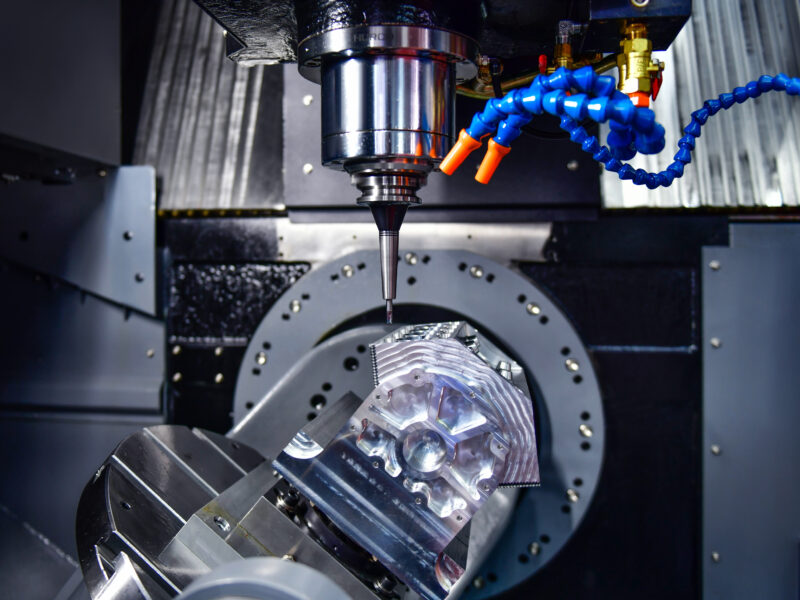
Surface finishing is a crucial final step in CNC machining that enhances a part’s function, performance, and appearance.
While CNC machines deliver tight tolerances and clean geometry, raw-machined surfaces often show tool marks, burrs, or inconsistent textures. That’s where finishing processes come in—to improve surface quality, meet cosmetic or technical specs, and prepare parts for specific applications like coating or bonding.
Whether you’re working with aluminum, stainless steel, titanium, or plastics, the right surface treatment can influence product life, wear resistance, corrosion protection, and even regulatory compliance.
This guide explains the most common surface finishing options used in CNC machining—and when to use them.
Why Surface Finishing Matters in CNC Machining
Raw CNC-machined parts may meet dimensional tolerances but rarely meet final application requirements.
Finishing helps:
- Improve corrosion resistance
- Reduce friction or wear
- Enhance adhesion for paints and coatings
- Meet cosmetic and branding expectations
- Remove burrs and sharp edges
- Comply with industry standards (e.g. aerospace, medical)
Surface finish is typically measured in Ra (roughness average), expressed in micrometers (µm). Depending on the application, finishes can range from rough (Ra 6.3 µm) to mirror-polished (Ra 0.1 µm).
1. As-Machined Finish (No Post-Processing)
“As-machined” means no further treatment after CNC cutting.
It’s suitable for internal components, functional prototypes, and non-cosmetic applications.
- Ra Value: 3.2 µm – 6.3 µm
- Appearance: Visible tool paths, minor burrs possible
- Best For: Engineering prototypes, internal structural parts
- Cost: Lowest, no secondary operation
While it’s the most cost-effective option, it may not be acceptable in industries requiring smooth or hygienic surfaces.
2. Bead Blasting
Bead blasting uses pressurized air and fine beads to produce a uniform matte texture.
This process removes sharp edges, tool marks, and minor surface imperfections.
- Ra Value: 1.6 µm – 3.2 µm
- Appearance: Satin or matte finish
- Best For: Consumer-facing parts, electronics enclosures
- Common Materials: Aluminum, stainless steel, titanium
Bead blasting does not change part dimensions significantly but should be avoided on high-tolerance mating surfaces.
3. Anodizing (Type II and Type III)
Anodizing is an electrochemical process that thickens the natural oxide layer on aluminum surfaces.
Type II Anodizing:
- Decorative and corrosion-resistant
- Available in various colors (black, red, blue, etc.)
- Ra Value: 1.6 µm – 3.2 µm
- Best For: Consumer products, drone parts, electronics
Type III Anodizing (Hard Anodizing):
- Thicker, wear-resistant coating
- Better suited for harsh environments
- Ra Value: 1.6 µm – 6.3 µm
- Best For: Aerospace, automotive, industrial machinery
Note: Anodizing slightly alters dimensions, typically 10–25 µm buildup.
4. Powder Coating
Powder coating applies dry polymer powder to a metal surface using electrostatic charge, followed by baking.
- Finish: Thick, smooth, durable layer
- Color options: Wide range of custom shades
- Protection: Excellent corrosion, wear, and impact resistance
- Thickness: 50–150 µm
Powder coating is ideal for components exposed to weather, chemicals, or frequent handling. It’s often used on consumer products, automotive parts, and industrial enclosures.
5. Electropolishing
Electropolishing is a chemical process that removes a thin layer of material to smooth and brighten metal surfaces.
It’s especially common in medical, pharmaceutical, and food-grade components.
- Ra Value: As low as 0.2 µm
- Finish: Clean, smooth, corrosion-resistant
- Materials: Stainless steel, titanium, Inconel
- Applications: Surgical tools, food processing equipment, cleanroom components
Electropolishing reduces micro-burrs and removes embedded contaminants, enhancing cleanliness and sterility.
6. Brushing
Brushing creates a linear, directional grain on the part surface using abrasive belts or pads.
- Ra Value: Typically 0.8–1.6 µm
- Appearance: Satin lines; aesthetic finish
- Use Case: Decorative panels, bezels, trim
- Materials: Stainless steel, aluminum
While it improves visual appeal, brushing can reduce corrosion resistance by disrupting the oxide layer—especially on stainless steel.
7. Chemical Passivation
Passivation is a treatment that enhances the corrosion resistance of stainless steel by removing iron contamination.
- Process: Acid bath removes free iron, allowing chromium oxide to reform
- Best For: Medical, aerospace, and marine parts
- Materials: 300-series stainless steels
- Effect: No change in appearance or dimension
Passivation is essential for ensuring long-term durability in parts used in sterile or corrosive environments.
8. Tumbling / Vibratory Finishing
Tumbling uses media and vibratory motion to smooth part surfaces and remove sharp edges.
- Best For: Deburring and edge rounding
- Finish: Softened edges, uniform texture
- Materials: Most metals and plastics
- Common Uses: Gears, fasteners, cast parts
This is often used as a pre-finishing step before anodizing or painting.
9. Custom Polishing and Mirror Finishing
Mirror finishing is achieved through successive polishing steps using fine abrasives or compounds.
- Ra Value: < 0.1 µm
- Appearance: Highly reflective, smooth
- Best For: Optical parts, medical implants, high-end consumer products
- Materials: Stainless steel, brass, titanium, acrylic
It’s labor-intensive but delivers the highest cosmetic quality. CNC-machined acrylic components can also be polished to transparency.
Choosing the Right Finish for Your CNC Part
Selecting the right finish depends on:
- Functionality: Does the part need corrosion resistance, wear resistance, or low friction?
- Aesthetics: Is the part visible to the end-user?
- Material: Not all finishes are compatible with every material
- Industry Standards: Do you need FDA, ISO, or aerospace compliance?
- Tolerances: Will the finish affect critical dimensions?
Understanding your finishing options ensures your part meets both performance and visual requirements without added delays or cost.
Integrated Finishing with CNC Machining Workflows
Modern CNC service providers now integrate finishing into a single digital workflow. This means you can go from CAD to finished part faster—whether you need just deburring or multiple finishing stages.
In high-precision environments such as aerospace or medical, finishing is not optional—it’s a core part of quality control and compliance.
For a detailed breakdown of machine capabilities and end-to-end production processes, refer to this complete guide to CNC cutting machines.
Summary: Surface Finish Comparison Table
| Finish Type | Surface Roughness (Ra µm) | Key Benefit | Suitable Materials |
|---|---|---|---|
| As-machined | 3.2 – 6.3 | Fast, low-cost | All |
| Bead Blasting | 1.6 – 3.2 | Uniform matte appearance | Aluminum, Steel, Titanium |
| Anodizing | 1.6 – 6.3 | Corrosion resistance, color | Aluminum only |
| Powder Coating | 5 – 10 | Thick, durable coating | All metals |
| Electropolishing | 0.2 – 0.8 | Biocompatibility, smoothness | Stainless, Titanium |
| Brushing | 0.8 – 1.6 | Aesthetic grain finish | Aluminum, Stainless Steel |
| Passivation | N/A | Corrosion protection | Stainless Steel |
| Tumbling | 3.2 – 6.3 | Deburring, edge rounding | Metals, Plastics |
| Mirror Polishing | < 0.1 | Premium appearance | Stainless, Acrylic, Titanium |
Final Thoughts
Surface finishing transforms a CNC-machined part from raw to ready.
It affects how the part performs, looks, wears, and complies with industry standards. Whether you’re building aerospace components, consumer electronics, or medical implants, the right finish makes the difference.
From anodizing and powder coating to bead blasting and polishing, understanding your finishing options enables better decisions, higher-quality parts, and a more efficient product lifecycle.
For precision machining combined with expert finishing capabilities, review this complete guide to CNC cutting machines to align your design and production strategy.