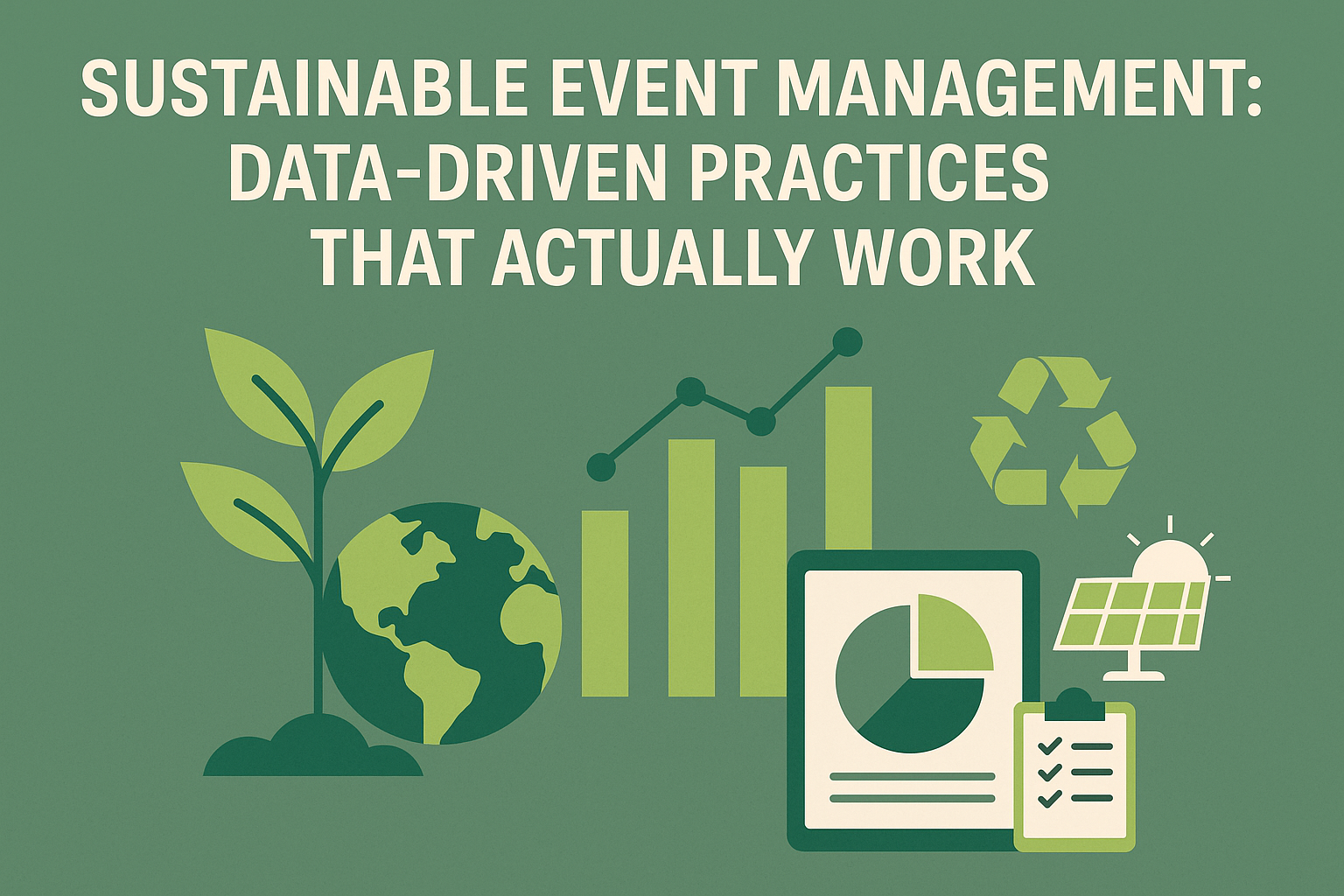
Sustainability is not a trend anymore; it is a requirement. The business events sector is being asked to take a lead in setting an example as the world continues to put the climate impact under the microscope. However, although the desire to go green is common, there is still a difference between aspiration and action. That is where data comes in. Sustainable Event Management can become more than a buzzword by changing the focus from feel-good measures to those that can be measured.
What then is data-driven sustainability? So, how do event professionals, PCOs and associations make what they do meaningful, credible and effective? Now, let us take a look at the practices already making a difference throughout the industry.
What is Sustainable Event Management?
Sustainable Event Management is the practice of planning and executing events in a way that minimises negative environmental, social, and economic impacts. This includes reducing waste, conserving energy and resources, sourcing locally, promoting inclusivity, and ensuring ethical practices throughout the event lifecycle. The goal is to create meaningful experiences while protecting the planet and supporting communities, without compromising future needs.
1. Defining a Measurable Sustainability Baseline
It is important to know the position of your event before any improvement can be made. Baseline development implies the gathering of information on key areas of impact, including:
- Energy consumption
- Water usage
- Travel and logistics carbon emissions
- Food waste and procurement
- Disposable material and waste diversion
Carbon calculators and digital sustainability dashboards are assisting organisers to see their environmental impact in real time. Such information is used as a benchmark and a motivator because teams can have realistic targets regarding future events.
Event Industry Trends and Research also state that events with a data-informed baseline are 40 per cent more likely to report progress against ESG goals year-on-year.
2. Selecting Metrics That Matter
Sustainability metrics are not all the same. To make Sustainable Event Management work, planners need to select KPIs that are relevant to their stakeholders, the type of event and the industry. Among the most influential ones are:
- Carbon footprint per delegate
- Local sourced F&B percentages
- The amount of waste that is diverted from landfills
- Cut out printed materials
- Renewable energy in the venue
These KPIs provide a more focused and clearer picture of your event’s performance and where it needs improvement. Sharing these results publicly, particularly with credible sources such as Association Magazine for Event Planners, provides an extra element of commitment that appeals to both conscious attendees and sponsors.
3. Using Digital Tools to Reduce the Environmental Load
Digital innovation is not only making users’ experience better, but it is also reducing carbon. There are smart tools, such as RFID badges, event apps, QR code access passes, and digital signage, which decrease the number of physical materials. Live streaming and on-demand video broaden the scope of your event and reduce air travel. Even personalisation algorithms of the agenda can assist in staggering attendance and food, and energy waste.
With data on the use of these technologies, the organisers will be able to monitor the level of success they are having in replacing the conventional methods and demonstrate that digital not only works but also wins.
4. Working with Green-Certified Suppliers and Venues
Your sustainability impact can be no stronger than the ecosystem you operate in. This will imply selecting partners, such as caterers, decorators, venues, transport providers, who are as committed to sustainability as you are, and who can provide the data to show it.
ISO 20121-certified (or otherwise sustainably credentialed) venues are able to offer breakdowns of their energy consumption, waste handling and green operations. Posting these metrics to the attendees and stakeholders, particularly in industry platforms like Association Magazine for Event Planners, strengthens the credibility and value of your event.
5. On-the-Spot Observation and After-Event Reporting
The current world is dynamic, and so should be your sustainability approach. The IoT-enabled devices or smart meters enable real-time monitoring of data, which enables planners to make real-time decisions on the ground. As an example, monitoring the density of people in different halls can assist in minimising the utilisation of energy or changing the ventilation parameters.
Sustainable reporting should be transparent after the event. It not only aids in proving accountability but also acts as a source of knowledge to make improvements in the future. You might want to consider publishing your sustainability report or incorporating it into the annual review of your events.
6. Involving the Attendees in Data-Informed Action
Audience participation is one of the most neglected features of Sustainable Event Management. Data may not only be used internally, but also as an engagement tool.
Allow delegates to choose carbon offsetting for travel. During the event, display live dashboards of waste reduction or energy savings to them. Provide rewards to sustainable behaviour, like digital swag bags rather than physical gifts. These minor gestures, with the help of real-time data, make sustainability real and participatory.
Conclusion
We are in an era where sustainability has become a norm, not a prize. And that change needs a change in planning, measuring, and reporting. Data is not merely a tool, but the basis of trust, transparency and long-term impact.
The events industry is in the best position possible to be a role model, with viable measurement tools, practical KPIs, and powerful industry communities to learn and share best practices, such as Association Magazine for Event Planners.
Sustainable Event Management is not only about going green in the context of the climate emergency and the growing demands of stakeholders. It is all about being smarter, more responsible, and eventually, more future-ready.