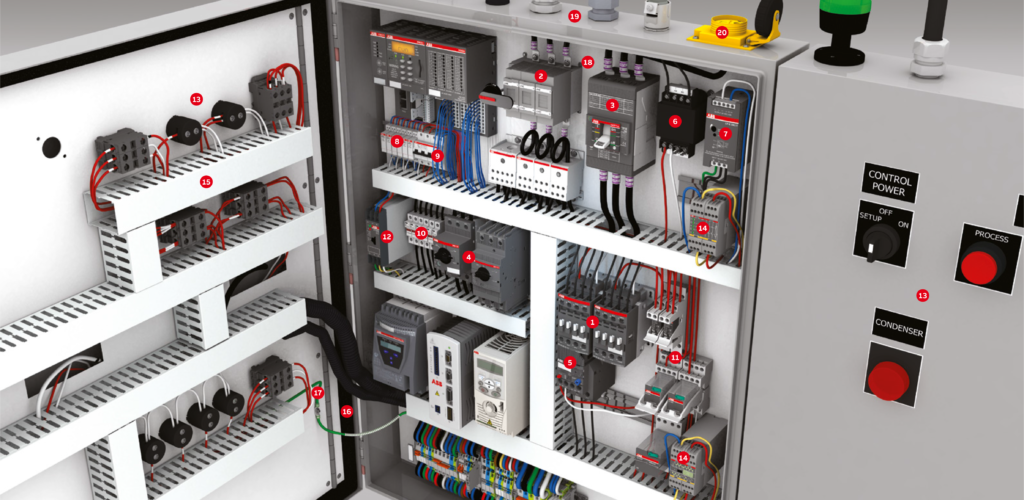
Control panel manufacturing is going through major changes in 2025. With industries aiming for more automation, energy efficiency, and safety, manufacturers are adopting new methods and technologies to stay ahead.
In this blog, we’ll explore the key trends shaping the control panel manufacturing industry. Whether you’re a control panel manufacturer, an end-user, or part of the electrical control panel manufacturing supply chain, these insights will help you prepare for the future.
Let’s look at what’s changing—and why it matters.
Why 2025 Is a Turning Point for Control Panel Manufacturing
Manufacturing needs are changing fast. From smart factories to sustainability targets, companies are expecting more from their control panels than ever before.
Here are a few reasons why the industry is shifting:
- Rise in automation and smart systems
- Increasing energy efficiency regulations
- High demand for custom control panels
- Greater focus on data-driven decision-making
- Push for faster and safer production methods
These factors are setting new standards for both design and delivery in industrial control panel manufacturing.
1. Smart and Connected Control Panels Are the New Standard
Smart control panels are no longer optional—they’re becoming the norm.
Manufacturers are now building panels that can communicate with other systems. These automation control panels collect and share data to help improve operations.
Features driving smart panel growth:
- Real-time data monitoring
- IoT (Internet of Things) integration
- Remote diagnostics and alerts
- Predictive maintenance using AI
This shift is helping manufacturers reduce downtime and make better decisions. In fact, studies show that predictive maintenance can cut breakdowns by 70%.
2. Demand for Custom Control Panels Is Growing
Standard solutions don’t work for every business anymore. Many industries—like pharmaceuticals, food processing, and energy—need custom control panels that fit their exact specifications.
Why custom solutions are rising:
- Unique machinery and layout needs
- Different safety and compliance rules
- Need for scalability and flexibility
PIMA Industrial, a trusted control panel supplier, reports a 40% increase in requests for tailored panels in 2024 alone. This trend is expected to continue through 2025.
3. Shift Toward Modular Panel Design
Speed and flexibility are everything in modern manufacturing. That’s why modular design is one of the biggest trends right now.
With modular panels, manufacturers can create sections that are easy to replace or upgrade—without rebuilding the entire system.
Benefits of modular design:
- Faster assembly and shipping
- Easier troubleshooting and repairs
- Lower total cost of ownership
- Scalable with business growth
Modular units are particularly useful for control panel assembly lines handling high volumes.
4. Focus on Energy Efficiency and Sustainability
Companies are under pressure to reduce their carbon footprint. As a result, electrical control panel manufacturing now includes energy-saving components and practices.
Efficiency improvements include:
- Smart energy meters
- Low-loss transformers
- Automated shutdown during idle times
- LED indicators and efficient wiring layouts
By 2025, most certified control panel manufacturers are expected to follow green standards, which also help clients save on energy bills.
5. Improved Safety Features and Compliance
Workplace safety remains a top priority. Control panel manufacturers in India and globally are focusing on improving panel safety to meet stricter guidelines.
Common safety upgrades:
- Arc flash protection
- Overcurrent protection devices
- Fire-resistant enclosures
- Compliance with UL, CE, IEC standards
These upgrades are not just regulatory—they also prevent accidents, downtime, and insurance issues.
6. Faster Production Through Automation and AI
Manual work slows down production. That’s why many control panel manufacturers are now using automation tools and AI to speed things up.
Examples of automation in panel manufacturing:
- Robotic wire cutting and stripping
- Automated drilling and labeling
- Software-driven testing tools
- AI-based quality control
This means fewer human errors and faster turnaround—key for both small and large orders.
7. Increased Use of Simulation Software in Design
Simulation software helps engineers visualize how a panel will work before it’s even built. This is becoming a game-changer in control panel design and manufacturing.
Software benefits:
- Detect wiring errors early
- Improve heat dissipation layout
- Reduce design-to-build time
- Optimize component placement
Using simulation cuts design time by up to 30%, and improves reliability in the final product.
8. Local Manufacturing and Sourcing Are Growing
Global supply chain delays have pushed many businesses to look for local partners. That’s great news for control panel manufacturers in India and regional markets.
Benefits of local sourcing:
- Shorter lead times
- Better communication and support
- Faster maintenance services
- Cost savings on logistics
Indian brands like PIMA Industrial are seeing more global demand due to fast delivery and quality production.
9. Growth in PLC-Based Panels
PLC (Programmable Logic Controller) systems are taking over manual controls in most industries. As a result, demand for PLC control panel manufacturers is rising.
Why PLC panels are trending:
- Easy programming and updates
- High-speed data processing
- Reduced wiring complexity
- Better scalability
Whether in factories, water plants, or energy sites, PLC-based control panels are now considered essential.
10. Demand for Specialized MCC and PCC Panels
Two types of panels seeing strong growth are MCC (Motor Control Center) and PCC (Power Control Center) panels.
Use Cases:
- MCC panels: Used for controlling motors in factories, especially in high-load operations
- PCC panels: Manage power distribution in large facilities
More industries are now looking for experienced MCC panel manufacturers and PCC panel manufacturers that can build for heavy-duty environments.
11. Simplified Panel Wiring and Layout
Clean, well-organized control panel wiring is not just about looks—it also improves function and safety. Modern panels are being designed with:
- Color-coded wires
- Easy-access terminals
- Clear labeling
- Neat cable routing
This makes it easier for maintenance teams to troubleshoot and extend the system.
12. Certification Is Becoming a Selling Point
Being a certified control panel manufacturer is now a key differentiator. Many clients won’t even consider a supplier without the right credentials.
Important certifications:
- UL (Underwriters Laboratories)
- CE (Conformité Européenne)
- ISO 9001 (Quality Management)
- IEC (International Electrotechnical Commission)
These labels help prove a supplier’s panels are safe, durable, and built to standard.
Frequently Asked Questions (FAQs)
What is control panel manufacturing?
It is the process of designing, assembling, and testing electrical panels that control equipment in industries. It includes wiring, component placement, and safety checks.
Why is smart technology important in control panel manufacturing?
Smart tech enables remote access, real-time monitoring, and predictive maintenance. It helps reduce downtime and improve overall efficiency.
Who are the top control panel manufacturers in India?
Companies like PIMA Industrial are known for quality production, fast delivery, and custom solutions in India’s growing panel market.
How are custom control panels different from standard ones?
Custom control panels are tailored to meet the exact technical and space needs of a specific machine or process, unlike off-the-shelf units.
Where can I find a certified control panel manufacturer?
Certified manufacturers usually mention their credentials like UL or CE on their website. PIMA Industrial is one such trusted name.
Will automation replace manual panel assembly?
Automation will reduce manual tasks but not eliminate them. Human expertise will still be needed for final checks, design decisions, and customization.
Final Thoughts
The future of control panel manufacturing is being shaped by technology, safety, and sustainability. From custom control panels to smart automation systems, the industry is adapting fast to meet modern needs.
Brands like PIMA Industrial are staying ahead by focusing on quality, innovation, and customer satisfaction.
If you’re looking to work with a reliable control panel supplier or explore PLC control panels, 2025 offers more options than ever before.