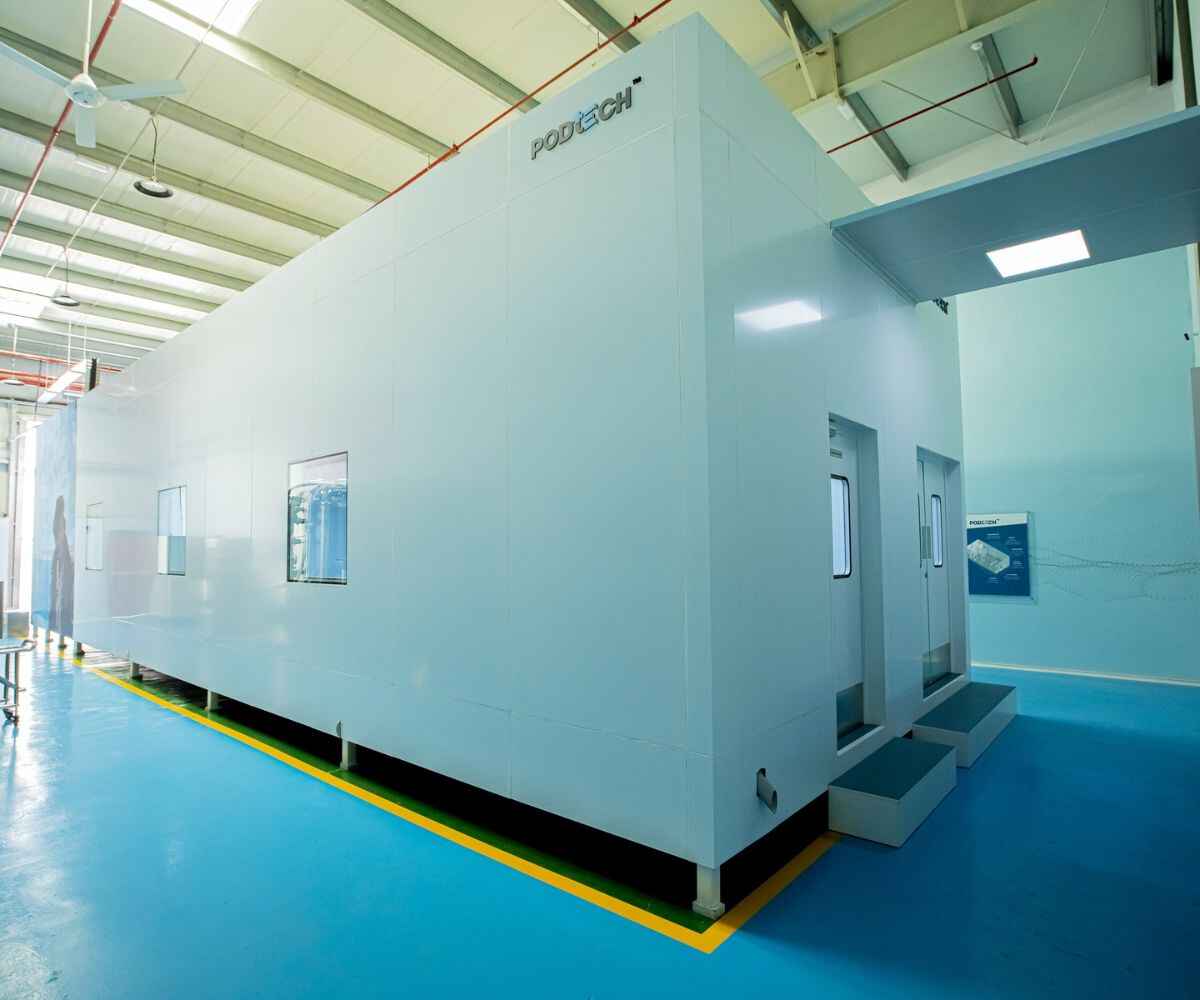
What is a Modular Clean Room?
A modular clean room is a controlled environment specifically designed to maintain extremely low levels of airborne particulates, microorganisms, and chemical vapours. Unlike traditional cleanrooms built from permanent materials, modular cleanrooms are constructed using prefabricated panels and components, offering enhanced flexibility, scalability, and cost-efficiency. These cleanrooms are ideal for industries such as pharmaceuticals, microelectronics, biotechnology, medical device manufacturing, and semiconductor production.
In Myanmar, the demand for high-performance modular cleanrooms has significantly increased, driven by rapid industrial growth, regulatory pressure, and a rising focus on quality control and product safety.
Why Choose Modular Clean Rooms in Myanmar?
1. Rapid Deployment and Cost Efficiency
In an emerging market like Myanmar, time-to-market is critical. Modular clean rooms offer quick installation without compromising quality. Components are prefabricated offsite, minimizing construction downtime and allowing businesses to become operational in a fraction of the time required for traditional builds.
Cost efficiency is another major advantage. Companies save on labour, material waste, and potential delays, making modular systems a financially wise investment.
2. Customization and Scalability
Every business has unique requirements. Whether it’s a Class 100 cleanroom for pharmaceutical testing or a Class 100,000 cleanroom for electronics assembly, modular systems can be tailor-made to meet ISO and GMP compliance standards.
In Myanmar, companies seeking future-proof solutions benefit immensely from the scalability of modular cleanrooms. As production demands grow, cleanrooms can be easily expanded or reconfigured without disrupting ongoing operations.
3. Compliance with International Standards
Myanmar-based manufacturers aiming to export to international markets must adhere to stringent global standards. Modular clean rooms can be built to comply with:
- ISO 14644 Cleanroom Standards
- GMP (Good Manufacturing Practice) Guidelines
- EU Annex 1 for Sterile Medicinal Products
- US FDA Regulations
Using modular cleanrooms ensures consistent air quality, pressure differential, temperature and humidity control, and contamination prevention, which are vital for meeting these regulations.
Key Components of Modular Clean Rooms
1. Wall and Ceiling Panels
Cleanroom walls and ceilings in modular systems are typically made of insulated steel panels, PVC-coated aluminium, or HPL (High-Pressure Laminate). These surfaces are smooth, non-shedding, and easy to clean, ensuring optimal contamination control.
2. HEPA/ULPA Filtration Systems
The heart of any cleanroom is its filtration system. HEPA (High-Efficiency Particulate Air) filters remove 99.97% of particles ≥0.3 microns, while ULPA (Ultra-Low Penetration Air) filters target particles as small as 0.12 microns. In Myanmar’s humid and dusty environments, efficient filtration is indispensable for maintaining cleanroom integrity.
3. HVAC and Air Handling Units (AHUs)
Modular cleanrooms are equipped with dedicated HVAC systems designed to maintain constant air changes per hour (ACH), temperature, and humidity levels. In tropical climates like Myanmar, precise climate control prevents condensation and microbial growth.
4. Cleanroom Lighting and Electrical Systems
Lighting is essential not only for visibility but also for compliance and safety. Modular clean rooms feature flush-mounted LED lighting, designed to reduce particle accumulation. GMP-compliant electrical systems are also installed to minimize electromagnetic interference and static discharge.
5. Flooring Solutions
Anti-static, antimicrobial vinyl or epoxy flooring is used to reduce particle retention and maintain hygiene. Seamless flooring with coved skirting ensures ease of cleaning and prevents microbial build-up in corners.
Applications of Modular Clean Rooms in Myanmar
Pharmaceutical and Biotech Industry
With the Ministry of Health and Sports (MOHS) in Myanmar intensifying its focus on drug safety and quality, pharmaceutical companies are increasingly investing in modular cleanrooms for:
- Sterile product manufacturing
- API (Active Pharmaceutical Ingredient) processing
- Microbial testing labs
Electronics and Semiconductor Manufacturing
Myanmar’s position as a low-cost manufacturing hub has attracted numerous electronics assemblers. Modular clean rooms support:
- PCB assembly
- Microchip fabrication
- Optoelectronics production
Food and Beverage Processing
Food-grade cleanrooms ensure hygienic processing, packaging, and storage of consumables, reducing risks of contamination and spoilage.
Medical Devices and Diagnostics
With Myanmar’s growing healthcare infrastructure, there is an increasing need for high-quality medical device production and diagnostics. Modular cleanrooms provide ideal environments for:
- IV catheter manufacturing
- Rapid test kit assembly
- Sterile packaging zones
Advantages of Modular Clean Room Systems in the Myanmar Market
1. Minimal Disruption
Modular installations cause minimal disruption to existing operations, especially important for facilities already in production.
2. Energy Efficiency
Modern modular clean rooms in Myanmar are equipped with energy-saving HVAC systems, low-power LED lighting, and intelligent control systems, which reduce operational costs.
3. Maintenance and Upgradability
These systems are designed for ease of maintenance, with replaceable filters, accessible control systems, and standardized components. Future upgrades such as automation or IoT integration can be seamlessly integrated.
4. Enhanced ROI
Given their low lifecycle costs, high performance, and regulatory compliance, modular cleanrooms offer excellent return on investment for Myanmar’s manufacturers aiming for global competitiveness.
Leading Modular Clean Room Providers in Myanmar
Several international and regional companies now offer turnkey modular cleanroom solutions in Myanmar, including:
- Design and Consultation
- Cleanroom Installation
- Validation and Certification
- Maintenance Services
Reputable providers often come with ISO certifications, local support teams, and a deep understanding of ASEAN compliance frameworks.
Read Also: How Assignment Helpers Simplify the IRAC Law Writing Method
Conclusion: Embrace the Future with Modular Clean Rooms in Myanmar
In a rapidly industrializing nation like Myanmar, the implementation of modular cleanrooms represents a strategic advantage. From reduced setup times to enhanced regulatory compliance and operational flexibility, modular cleanrooms empower businesses to innovate faster, scale efficiently, and meet global standards.
The modular cleanroom is not just a facility—it’s a critical investment in quality assurance, productivity, and long-term success.